
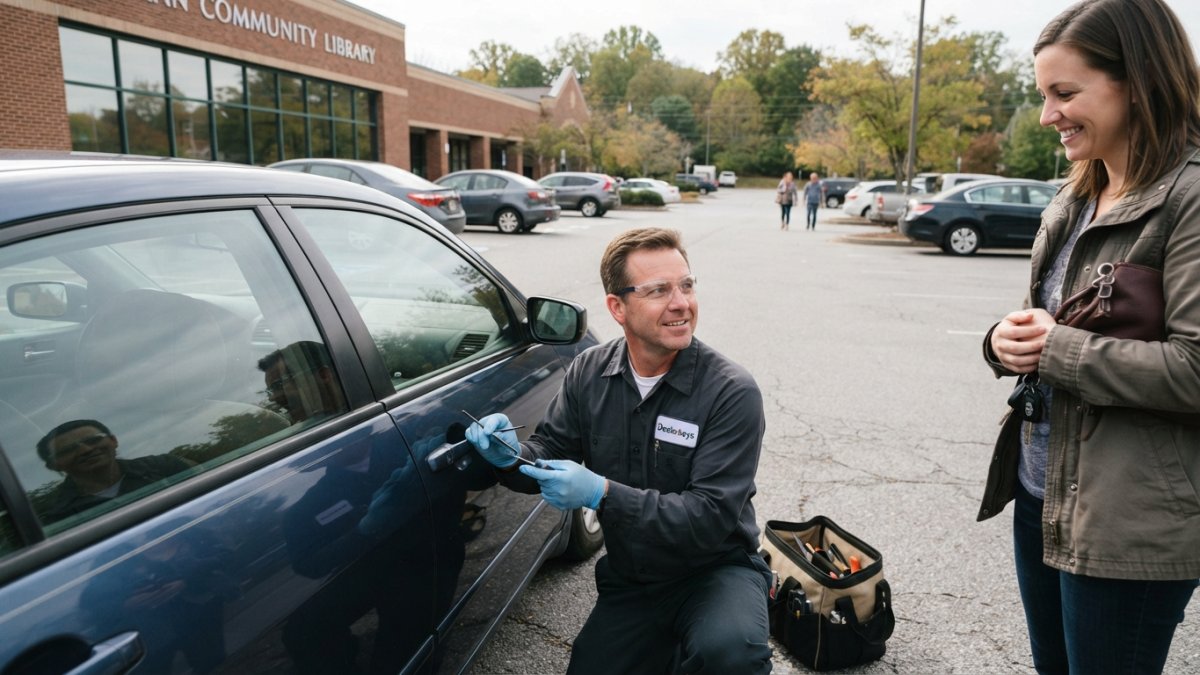
Last Updated: November 2, 2026
Quick Summary
Professional car entry without damage relies on non-marring tools matched to your specific vehicle, since no single kit opens every car door. Long-reach tools, air wedges, door wedges, and slim jims each solve a different problem, and light pressure with small movements is what makes damage-free entry possible.
- No single lockout kit opens every car door; tool suitability changes by vehicle.
- Inflate an air wedge only enough to pass a reach tool, typically a finger-width gap.
- Fit the non-marring wedge on the hinge side of the gap rather than the latch side.
- Call a professional if the vehicle has tight seals, side airbags, or rolling-code security.
- A pre-service condition walk-around with photos separates existing damage from new damage.
Table of Contents
- Why Damage-Free Entry Starts With the Right Car Lockout Tools
- The Core Car Lockout Tools Professionals Carry
- How to Unlock Car Without Damage: Step-by-Step Technique
- Vehicle-Specific Risks and Modern Security Systems
- When to Call a Professional Car Lockout Service
- What Damage-Free Service Includes and How to Verify It
- Finding Car Key Replacement Near Me Mobile: What to Expect
- Call Dealerkeys for Non-Destructive Vehicle Access
- Frequently Asked Questions
Why Damage-Free Entry Starts With the Right Car Lockout Tools
Locking your keys inside the car feels like a small disaster. Getting the door open without scratching the frame or cracking the glass takes the right approach, not brute force.
Here is the core idea most people miss. The tool matters less than matching it to your specific vehicle.
That one fact changes how you should think about the whole job.
The Core Car Lockout Tools Professionals Carry
Car lockout tools are specialized, non-marring implements designed to reach inside a locked vehicle and trigger the door mechanism without bending the frame or damaging the paint. A professional vehicle entry kit usually centers on a few core items.
- Long-reach tools: a flexible rod that slips through the door gap to press the unlock switch or pull the handle
- Air wedges: an inflatable bag that gently opens a small gap at the door frame
- Door wedges: a soft, non-marring block that holds a gap open
The theme across all of them is control. Non-marring tools protect the door seal, paint, and window glass. That is what separates damage-free entry from a rushed roadside attempt.
Long-Reach Tools and How They Work
A long-reach tool is a stiff but flexible shaft with a shaped tip. The technician slips it through the gap at the top of the door, then guides it to the interior unlock button or door handle. Good technique means light pressure and small movements. Forcing the tool can bend the door frame or scratch the internal components. This tool shines on cars with a clear path to the unlock switch.
Air Wedges, Door Wedges, and Slim Jims
An air-powered wedge slides into the door gap and inflates to create working room. A door wedge holds that space so the reach tool can pass through. Slim jims work the window channel to catch the lock mechanism directly. Each tool has a narrow use case.
Here are the core tools in a professional vehicle entry kit and what each one is used for.
| Tool | What it does |
|---|---|
| Long-reach tools | Flexible rod slips through door gap to press unlock switch or pull handle |
| Air wedges | Inflatable bag gently opens a small gap at the door frame |
| Door wedges | Soft, non-marring block that holds a gap open |
| Slim jims | Flat strip slides down window channel to reach lock linkage |
How to Unlock Car Without Damage: Step-by-Step Technique
The safe method is slow and deliberate. Rushing is how people break things.
- Stop and assess. Confirm the keys are truly inside and check every window for a child or pet. If a child or pet is locked in, call emergency services first, do not attempt entry yourself.
- Try every easy option. Test all doors, the trunk, and any connected app or roadside service you already pay for. A surprising number of "lockouts" are a rear door left unlocked or a trunk pass-through that reaches the cabin.
- Protect the door. Fit a non-marring wedge at the top corner of the door frame, on the hinge side of the gap rather than the latch side. The hinge side flexes more predictably and puts less stress on the latch and glass.
- Create a small gap. Inflate an air wedge just enough to pass a reach tool, typically a finger-width gap. Never force it. If the wedge will not slide in with light hand pressure, the seal is too tight for this approach and you should stop.
- Guide the tool. Move slowly to the unlock button or handle and press. Keep the shaft against the inner door panel, not against the glass or the outer skin, and use small movements rather than levering.
- Open gently and remove tools. Pull the door open by hand, deflate the wedge, and remove the reach tool before you close the door again.
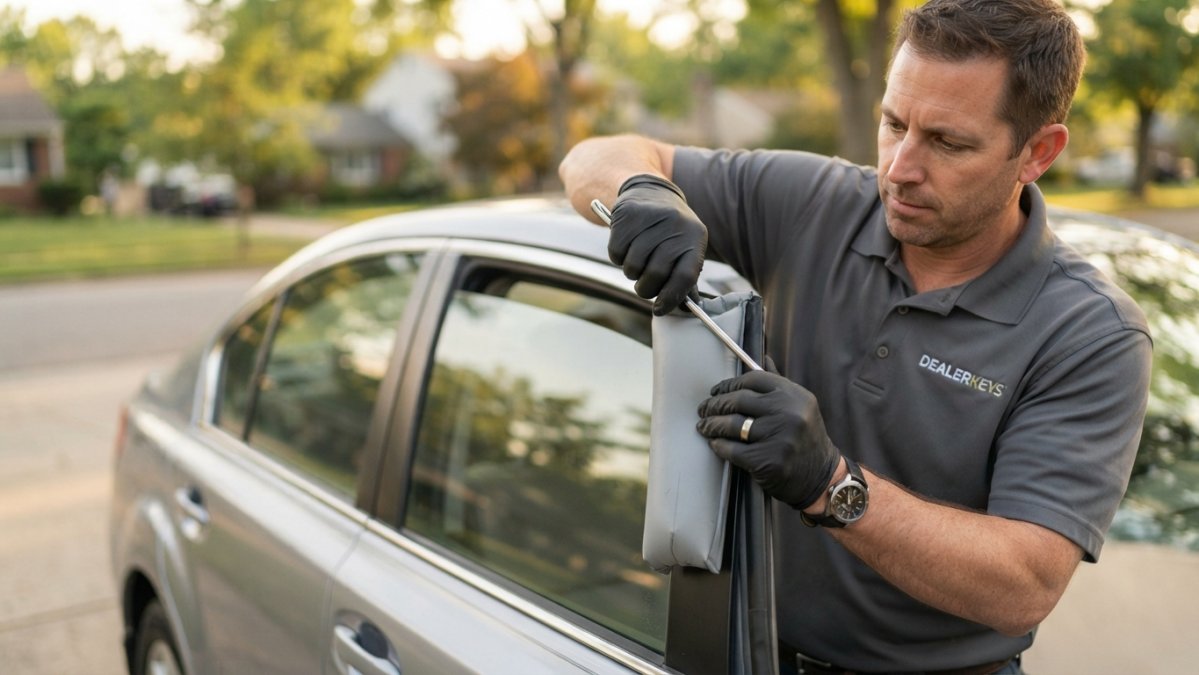
What resistance tells you
The tool is your feedback channel. A reach tool that moves freely is on the right path. A tool that stops hard against something is pressing on a window regulator, a lock rod, or a side-airbag module, back it out and change the angle. Grinding or a sudden give usually means you have slipped off the mechanism, not that you have found it.
The three failure points that cause damage
- Prying the frame instead of wedging the gap. Bending the door frame is the single most common DIY damage. The frame is thin stamped steel or aluminum and does not spring back.
- Over-inflating the air wedge. A wedge pushed past a finger-width gap can distort the window track and crack trim clips. Inflate in small pulses and check the gap each time.
- Dragging the tool across glass or paint. A reach tool pulled sideways across the window edge chips glass and scuffs clear coat. Lift the tool out the way it went in.
If your fob is dead rather than lost, the process changes. Our guide on how to unlock a car door with a dead fob covers the specific steps for that situation.
DIY or call a pro? A quick decision guide
Competitors show tools but rarely tell you when to put them down. Use this rule of thumb before you start:
- Try it yourself only if the vehicle is older, the door gap is visibly generous, there are no door-mounted airbags, and you have a non-marring wedge and reach tool on hand.
- Call a professional if the vehicle is a late model with tight seals, has side airbags in the door, uses a fob with rolling-code security, or if you cannot see a clear path to the unlock button.
- Call emergency services first any time a person or animal is trapped inside.
A professional call can cost less than repairing a bent frame or a replaced window regulator. Compare the quoted price with the likely repair cost before deciding.
Vehicle-Specific Risks and Modern Security Systems
Not every vehicle plays by the same rules. Modern cars add layers that make generic tools risky.
- Tight door seals and thick frames leave little room for a reach tool
- Side airbags mounted in the door make prying dangerous
- Rolling codes and immobilizers mean an open door does not mean a startable car
Vehicle-specific tools exist for a reason. A technician who works on many makes can often identify which approach fits a given model.
When to Call a Professional Car Lockout Service
A professional car lockout service is the right call when the vehicle has a tight seal, side airbags, an anti-theft system, or when a child or pet is inside. Many owners try a few safe steps first, then hand it off.
Call a pro right away if:
- A child or pet is locked inside (call emergency services first)
- The door will not yield to gentle pressure
- The car has advanced security or door-mounted airbags
A locksmith can bring the full kit and the experience to pick the right tool. For a full walkthrough of what to do in the moment, see our guide on emergency car lockout services.
What Damage-Free Service Includes and How to Verify It
Damage-free service means the technician opens the vehicle using non-marring tools and leaves the door, paint, seal, and glass exactly as they were. Most competitors stop at that definition. The useful part is knowing what a proper damage-free visit actually includes and how to verify it before and after the work.
What a damage-free visit should include
- Authorization and identity check. The technician confirms you own or are authorized to operate the vehicle before any tool touches it, typically a driver's license, registration, or insurance card matching the vehicle. A pro who skips this step is a red flag.
- A pre-service condition walk-around. Before opening the door, the technician notes existing scratches, dents, and trim damage, ideally with photos. This protects both of you.
- Non-marring tools matched to the vehicle. Air wedges, door wedges, and reach tools with protective coatings, not a single universal kit forced onto every make.
How to verify it before anyone touches your car
Ask these questions when you call or before work begins:
- Which tools will you use, and are they non-marring?
- Do you carry vehicle-specific tools, or one universal kit?
- Will you document the vehicle's condition before and after?
A pro should answer these plainly. If they cannot, keep looking. On-site mobile key work usually takes a short visit, and our breakdown of how long mobile key replacement takes explains what affects timing.
Key Takeaway Verification is a two-part habit: confirm the process before the work, and inspect the vehicle with the technician after. Photos before and after are the simplest protection for both sides.What damage-free service does not mean
Damage-free does not mean risk-free. A vehicle with a failing window regulator, brittle trim clips, or prior bodywork can show wear during a legitimate opening. That is why the pre-service walk-around matters, it separates pre-existing condition from new damage. A reputable technician will point out those risks before starting rather than after.
Finding Car Key Replacement Near Me Mobile: What to Expect
A mobile key service brings the tools and programming equipment to your vehicle. That means no tow and no dealership trip for many jobs.
Here is what a typical visit looks like:
- The technician confirms your ownership and vehicle details
- They cut and program the key or fob on site
- They test the locks, ignition, and security system
For owners in East Tennessee, our guide on mobile car key replacement covers what the on-site visit involves from start to finish. Dealerkeys handles key cutting, fob programming, and module diagnostics on site, seven days a week.
Call Dealerkeys for Non-Destructive Vehicle Access
Getting locked out is stressful. Doing it yourself with the wrong tool can turn a quick fix into a body shop bill.
Dealerkeys brings 26+ years of experience and OEM-level tools to key and module programming work. If a damaged or worn key is part of the problem, we also supply replacement keys, and our clone modules service covers module repair and cloning when the electronics behind the lock need attention.
If you are in East Tennessee and need help now, visit our automotive locksmith page for coverage and the dispatch number. Get started with Dealerkeys and get back on the road without a scratch on your door.
Frequently Asked Questions
Can a locksmith unlock a car without damaging it?
Yes. A trained technician using non-marring tools can achieve damage-free entry on most vehicles. The key is tool selection: long-reach tools, air wedges, and door wedges are designed to slip past the door seal without bending the frame or scratching paint. Damage usually happens when someone forces a tool or uses the wrong size wedge. Before hiring, ask what tools the technician uses and whether they carry vehicle-specific equipment for your make and model.
Do Slim Jims work on all vehicles?
No. Slim Jims are one of the older car lockout tools, and they do not work on every vehicle. Many modern cars use linkage systems or electronic latches that a Slim Jim cannot reach or release, and forcing one can damage internal components inside the door. A professional will assess your vehicle first and choose a long-reach tool, air wedge, or other method that fits that specific door design rather than reaching for a Slim Jim by default.
How long does professional car entry usually take?
The time to open a vehicle depends on the vehicle, the door design, and whether any security system is involved. The bigger variable is dispatch time. When you call a mobile service like Dealerkeys, tell them your make, model, and location so they can send the right tools and give you a realistic arrival window before you commit.
What should I check before hiring a car lockout service?
Confirm three things: that the provider carries non-marring tools and vehicle-specific equipment, that they can show proof of authorization to work on your vehicle, and that they explain pricing factors before starting. Ask whether they handle key replacement and fob programming on-site, since a lockout sometimes turns into a lost-key job. A provider that answers these questions clearly is far less likely to cause paint damage or a bent frame than one that quotes a price and rushes in.
Locked out and not sure whether to keep trying or call for help? Dealerkeys offers non-destructive vehicle entry, on-site fob programming, and expert diagnostics for anti-theft systems, backed by OEM-level tools and 26+ years in the trade. Call for dispatch and let a trained technician open your vehicle the right way.
Call for dispatch Add dealerkeys.com as a preferred source on Google →