
Quick Summary
If your stolen car keys are taken, act within the first hour: search quickly for the keys, file a police report, and call your insurer the same day. Then have a locksmith or dealer erase the stolen key from your vehicle's memory so it can no longer start the car.
- Spend no more than 10 minutes searching home, workplace, and car before assuming theft.
- File a police report and get the report number, which insurers usually require for a claim.
- Call your insurer the same day to ask about key replacement coverage and deductibles.
- Erasing the stolen key from the immobilizer is the only permanent fix; other steps are stopgaps.
- Remove any address from key tags, since a thief with your keys and address can reach your home.
Table of Contents
- Act Fast: Your First Steps After Car Keys Are Stolen
- How to Tell Whether Your Keys Were Lost or Stolen
- Reporting the Theft to Police and Your Insurer
- How to Disable a Stolen Car Key and Secure Your Vehicle
- What to Do If Car Keys and House Keys Are Stolen Together
- Car Key Fob Replacement Cost and Replacement Options
- Booking a Mobile Automotive Locksmith for Your Replacement Key
- Frequently Asked Questions
Act Fast: Your First Steps After Car Keys Are Stolen
Last Updated: November 1, 2026
Stolen car keys are an emergency, not an inconvenience. If your keys were taken from your home, your pocket, or your vehicle, the first hour matters more than the rest of the week.
Here is the order to work through:
- Check every place you could have left the keys before assuming theft
- Call the police and file a report if you confirm they are gone
- Contact your insurer to start a claim and ask about coverage
- Disable the stolen key or secure the vehicle as soon as possible
- Arrange a replacement key or fob through a locksmith or dealer
Start with a quick search of your home, workplace, and car. Look under seats, in door pockets, and in the last place you remember holding the keys.
Watch out: A common mistake is waiting until the next morning to report theft. Thieves often act within hours, and a same-day police report gives your insurer the paperwork it needs.
How to Tell Whether Your Keys Were Lost or Stolen
Lost keys and stolen keys call for different responses. A lost key may simply be somewhere in your house. A stolen key means someone else has a working copy of your vehicle access, and you need to treat it as a security threat.
Look for these signs that point toward theft:
- Your door or home was entered without force, or other items are missing
- The keys were in a bag, coat, or car that was broken into
- Your vehicle has moved, or you hear it starting unexpectedly
- Other valuables, such as a wallet or phone, are also gone
If you cannot find the keys after a thorough search, and anything on this list applies, assume the keys were stolen. Reporting a theft that turns out to be a loss costs you little. Ignoring a real theft can cost you the vehicle.
Reporting the Theft to Police and Your Insurer
Filing a police report is the step that most protects you, and it is the first thing an insurer will ask about. Call your local police non-emergency line, or use the department's online reporting portal if it accepts theft reports that way.
When you report, give the dispatcher or officer:
- The time and place you last had the keys in your possession
- A description of the keys (fob, transponder, traditional) and any identifying tag
- The vehicle's year, make, model, color, license plate, and VIN
- Whether anything else was taken (wallet, phone, registration, house keys)
- Whether your home address was attached to the keys or documents
Ask for the report number before you hang up, and request a copy by email or pickup. Insurers routinely require the report number to open a theft-related claim, and some require the actual report PDF.
What to ask your insurer
Call your insurance company the same day. Ask specifically:
- Does my policy cover key or fob replacement after theft, and is there a separate key-replacement deductible?
- Is key replacement covered under comprehensive coverage, or is it an add-on I declined?
- Does the policy cover a rental car while the vehicle is rekeyed or while I wait for a replacement?
- Does roadside assistance cover lockouts and towing to a dealer if the vehicle cannot be started?
- Will a theft claim affect my premium, and does it count as a comprehensive claim?
Coverage varies widely. Many standard auto policies treat key replacement as part of comprehensive coverage subject to the comprehensive deductible, which can exceed the cost of the key itself. Some insurers offer a key-replacement endorsement for a few dollars a month; others exclude keys entirely. Ask for the answer in writing or note the representative's name and the date.
Documentation to keep
Build a folder, paper or digital, with:
- The police report number and a copy of the report
- Your insurer's claim number and the name of your adjuster
- Receipts for locksmith, dealer, towing, rental, and lock-rekeying costs
- Photos of the damaged ignition, door, or window if a break-in occurred
- A written timeline of when the keys disappeared and when you noticed
How to Disable a Stolen Car Key and Secure Your Vehicle
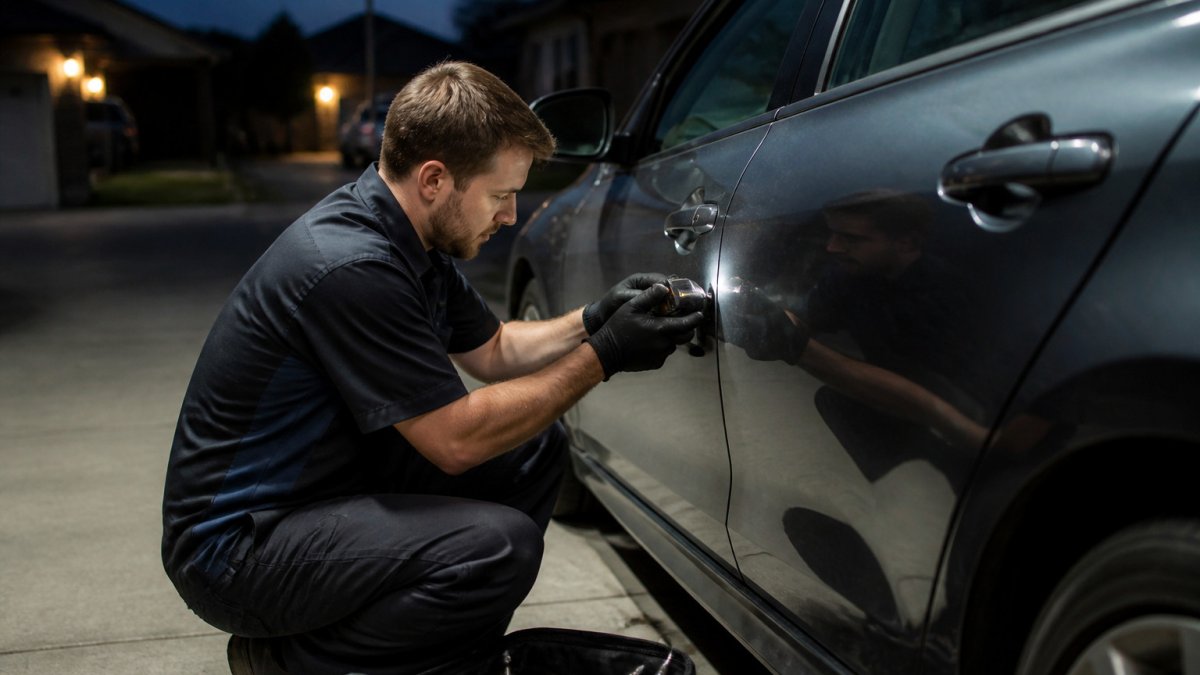
Modern vehicles use an immobilizer, an anti-theft system that only allows the engine to start when it reads a key or fob programmed into the vehicle's authorized-key memory. A thief holding your key is, to the car, a legitimate driver. Disabling that key means removing it from the vehicle's memory, not just hiding the car.
How key disabling actually works
Most vehicles store a list of authorized keys in the immobilizer or body-control module. A locksmith or dealer with the right scan tool can:
- Erase all keys from memory and reprogram only the keys you still physically hold. This is the surest way to kill a stolen key, once it is erased, it will not start the car even though it still looks fine.
- Add a new key and delete the missing one if the system supports selective deletion. Not every make does; some require a full erase-and-relearn.
- Reset the keyless-entry PIN or rolling code if your vehicle uses a keypad or phone-based access system.
Expect this to require a visit from a locksmith or a trip to the dealer. Generic OBD-II tools usually cannot perform immobilizer relearns on late-model vehicles; the provider needs make-specific software and, on some brands, a security credential from the manufacturer.
Temporary safeguards while you wait
You may not be able to disable the key the same hour it is stolen. In the meantime:
- Park where the car cannot easily be driven out, a locked garage, a gated lot, or a spot blocked by another vehicle.
- Use a steering-wheel or pedal lock. It will not stop a determined thief, but it buys time and deters opportunistic ones.
- Pull the fuel-pump fuse or disconnect the battery if you are mechanically comfortable and the vehicle will be parked for a day or more. Confirm with a mechanic first; some modern cars throw codes or lose settings.
- Keep the remaining fob away from the vehicle and away from your home address and registration documents.
- Enable any connected-car app features that let you locate the vehicle, set a geofence, or receive a movement alert.
What to ask the provider
Before you book, ask:
- Can you erase a specific key from this vehicle's memory, or does it require a full relearn?
- Do you need the vehicle present, or can you do it on-site?
- Will my remaining keys keep working after the erase?
- Do you need proof of ownership and the VIN?
If the vehicle is a late model with a smart key or phone-as-key system, confirm the provider has done that make and system before. A failed relearn can leave the car unable to start until it is towed to a dealer.
What to Do If Car Keys and House Keys Are Stolen Together
When a thief takes both your car keys and your house keys, the risk grows. Anyone with your home address and your keys can enter your house and may learn where you park.
Take these steps right away:
- Change or rekey your home locks, or add a temporary deadbolt
- Tell your household members so they know the keys are gone
- Report the theft as one incident so the police and insurer have the full picture
- Consider a lock change if the key tags show your address
Some people fear that a stolen key tag identifies their vehicle or home. If a key tag has your address, remove it from the key or get a new key tag. Do not leave the address on the key where a thief can see it.
Car Key Fob Replacement Cost and Replacement Options
Replacement cost depends on key type, vehicle age, and where you buy the key. Older mechanical keys are cheap to copy. Transponder keys and smart fobs cost more because they must be programmed to your vehicle.
The main options are:
- Dealership: Usually the most expensive, but reliable for newer vehicles
- Automotive locksmith: Often faster and less costly, with on-site service
- Mail-in service: Useful when a vehicle has lost every key and the owner cannot wait for a visit
Pricing varies by vehicle, so ask for a quote before you agree to any work.
The options for replacing a stolen key or fob differ in cost and speed, so compare them before you book. If you have lost every key, you can start a mail-in All Keys Lost order instead of waiting for a visit.
| Option | Best for | Key difference |
|---|---|---|
| Dealership | Newer vehicles | Usually the most expensive |
| Automotive locksmith | Faster, on-site service | Often less costly |
| Mail-in service | Vehicles with every key lost | Useful when you cannot wait for a visit |
Booking a Mobile Automotive Locksmith for Your Replacement Key
A mobile automotive locksmith can cut and program a replacement key where your vehicle is parked. This saves a tow and a trip to the dealer. A mobile automotive locksmith can also be booked for on-site key replacement and fob programming.
When you call, have these details ready:
- Year, make, and model of the vehicle
- Your proof of ownership, such as a registration and driver's license
- The police report number, if you filed one
- Your location and the best time for service
If you have lost every key and an on-site visit is not practical, ask about mail-in options for your situation.
Frequently Asked Questions
What should I do if someone steals my car keys?
Report the theft to the police right away and file a report that includes the vehicle identification number and your proof of ownership. Then contact your insurer to check whether your policy covers key replacement. Next, arrange for a replacement key or fob and have the stolen key disabled so it cannot start the vehicle. Keep copies of the police report and any receipts, since your insurer will likely ask for them when you file a claim.
Should I report stolen car keys to the police?
Yes. A police report documents the theft, which your insurer will usually require before it considers a claim for replacement keys. The report also creates a record if the vehicle is later used in a crime. Bring the vehicle identification number, your vehicle registration, and your driver's license when you file. If the keys were taken along with other property, list those items too.
Will car insurance cover stolen car keys?
It depends on your policy. Some comprehensive coverage plans include key replacement after a theft, while others do not. Call your insurance agent, read your policy's language about keys and locks, and ask what documentation the insurer needs. Your roadside assistance plan may also offer help with lockouts. Ask before you schedule service so you know which costs you are responsible for.
How long does it take to replace a stolen car key?
The time depends on the key type and whether a mobile locksmith or dealership handles the job. Simple mechanical keys can often be cut quickly, while smart keys and fobs require programming that takes longer. Mobile automotive locksmiths can often come to your location, which avoids towing. For current availability and pricing, request a quote from a provider before booking.
Call for dispatch Add dealerkeys.com as a preferred source on Google →