
Table of Contents
- Why Your Security Light Is Flashing
- How the Anti-Theft System and Immobilizer Work
- Car Security Light Flashing and Won't Start: What to Do First
- Immobilizer Key Not Recognized: Key and Fob Checks
- How to Reset Car Immobilizer System Safely
- Security Light Flashing While Driving: What It Means
- When to Call a Professional for Diagnostics and Repair
- Conclusion
- Frequently Asked Questions
Last Updated: October 18, 2026
Why Your Security Light Is Flashing
A flashing security light on your dashboard is not automatically a problem. In most cars, it is the anti-theft system telling you it is armed and watching.
The first thing to understand about a security light flashing: normal operation and a real fault can look identical. The difference comes down to when it flashes, how fast, and whether the car still starts.
Normal Flashing vs. a Real Fault
Normal flashing happens when the vehicle is parked, locked, and the key is out of the ignition. The light blinks slowly and steadily, often once every second or two. That pattern means the vehicle security system is armed. Nothing is wrong.
A fault looks different. Watch for these signs:
- The light flashes fast or in an irregular pattern
- It stays on solid instead of blinking
- It keeps flashing after you insert the key and turn the ignition
Slow blink with the key out: normal. Anything else: keep reading.
How the Anti-Theft System and Immobilizer Work
The immobilizer is an electronic theft deterrent built into your vehicle. It stops the engine from starting unless it reads the correct transponder chip inside your key.
Here is the chain of communication. The ignition switch wakes the system.
The security indicator light reports what the immobilizer is doing, which is why diagnosing a flashing light means testing the whole chain, not just the bulb.
Pro Tip The antenna ring around the ignition cylinder is a common failure point on older vehicles. It is a cheap part, but a failed ring reads as "key not recognized" and sends owners straight to the dealer for a new key they did not need.Car Security Light Flashing and Won't Start: What to Do First
A car that will not start with a flashing security light has almost certainly lost key recognition, not battery power. Work through these steps in order.
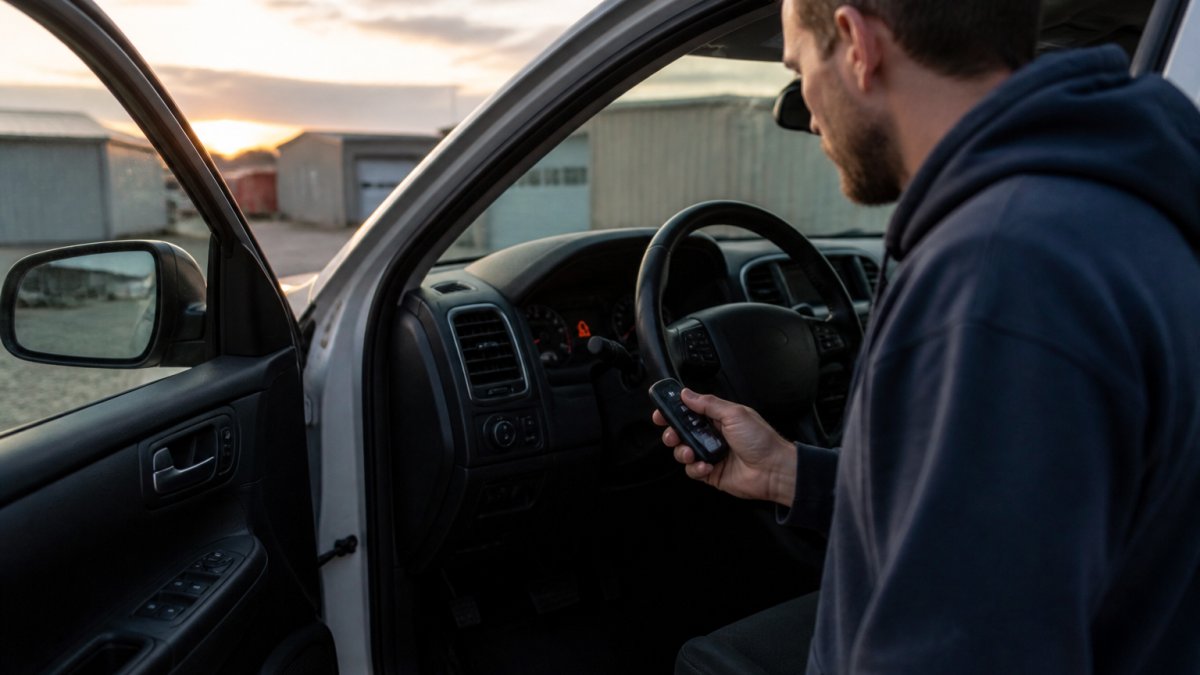
- Turn everything off and wait 10 minutes. Key out, doors closed. This lets the immobilizer settle.
- Try your spare key. If the spare works, the problem is in the first key, usually the transponder or fob battery.
- Check the fob battery. A weak fob battery can interrupt key communication on push-button start cars.
- Look for a second key on the ring. Two transponder keys close together can confuse the antenna.
- Try a jump start only if the engine cranks slowly. A weak car battery causes its own no-start problems, but it rarely triggers the security light.
If none of that works, stop cranking. Repeated failed start attempts can lock the immobilizer further.
Distinguishing Immobilizer Faults from Battery, Ignition, and Starter Problems
Each fault leaves a different signature:
| Symptom | Likely Cause | Quick Check |
|---|---|---|
| Slow crank, dim lights, no security light | Weak car battery | Check battery voltage |
| Strong crank, no start, security light flashing | Immobilizer or key recognition | Try spare key |
| Nothing happens on key turn, no dash lights | Ignition switch or battery | Check for power at dash |
| Single click, no crank, no security light | Starter or starter circuit | Listen for the click |
| Starts then dies within seconds | Immobilizer cutting fuel or spark | Watch the security light |
A strong crank with a flashing light points at the key, not the battery. A weak crank with no light points at the battery.
Immobilizer Key Not Recognized: Key and Fob Checks
"Key not recognized" means the ECM read the key and rejected it, or never read it at all. Both produce the same result: no start.
Run these checks:
- Swap keys. If the spare starts the car, the original key has failed.
- Replace the fob battery. Use the correct coin cell, seated the right way up.
- Inspect the key for damage. Cracks in the plastic housing can break the transponder's connection.
If the spare key also fails, the fault is in the vehicle: the antenna ring, the wiring, or the immobilizer itself. That is a diagnostic job, not a key-cutting job.
Watch Out Do not keep cranking a car with an unrecognized key. Many immobilizers lock out for a set period after repeated failed attempts, and some require a scan tool to clear. You can turn a five-minute fix into a tow.How to Reset Car Immobilizer System Safely
Knowing how to reset car immobilizer system behavior starts with one rule: reset the simple things first, and never guess at the module. A true immobilizer reset is not a button combination, it is a security-authorized relearn that, on most vehicles built after the mid-2000s, requires a scan tool with security access.
What a Real Reset Actually Involves
When a technician performs an immobilizer relearn, the scan tool does four things in sequence:
- Requests security access from the immobilizer or body control module using a seed-and-key challenge. Without that handshake, the module refuses programming commands.
- Reads stored fault codes from the immobilizer, ECM, and BCM to see which part of the key-to-ECM chain dropped out.
- Erases and re-registers key IDs so the module accepts the transponder codes you actually have.
- Performs a start-and-run verification to confirm the light goes out and the engine stays running.
Forum "resets" that jump pins or unplug modules skip the security handshake and can leave the module locked in a state only a dealer-level tool can clear.
Safe Steps You Can Do Yourself
Try this sequence before paying for a scan:
- Disconnect the battery negative cable for about 15 minutes, then reconnect. This clears temporary memory on many vehicles but does not erase immobilizer key data.
- Lock and unlock the car with the fob, then try starting with the key in the driver's door first on some models.
- Cycle the ignition on and off a few times with a recognized key.
- Check your owner's manual for a model-specific relearn procedure. Several brands publish one, and some require a specific door-open, key-cycle, and wait sequence.
Do not unplug modules, swap parts, or follow resets that involve jumping pins. Immobilizer data lives in the ECM and BCM, and a wrong move can wipe it. If the simple steps above fail, stop and let a scan tool read the codes.
What to Tell a Technician
When you book a diagnostic, bring every key and fob you own, the vehicle's year, make, model, and trim, and a note on when the light flashes (parked, key in, cranking, or driving). A technician will typically check stored immobilizer and BCM codes, verify antenna-ring signal with a key tester, and confirm battery voltage under load before touching programming, a weak battery can cause a failed relearn.
What a Reset Cannot Fix
A relearn restores communication between a good key and a good module. It will not fix a cracked transponder, a failed antenna ring, a corroded ignition-switch connector, or a water-damaged module. If the light returns within a few start cycles, the part is still failing and needs replacement, not another reset.
Security Light Flashing While Driving: What It Means
A security light flashing while driving is different from a parked blink. The system is armed and running, and it has logged a fault. Common triggers include a failing fob battery, a loose antenna connection, or a module losing communication on the data bus.
Pull over safely and check three things:
- Is the light steady or blinking?
- Is the car running normally otherwise?
- Does the fob still lock and unlock the doors?
If the car drives fine, continue to a safe stop and deal with it there. If the light comes with a check engine light or rough running, treat it as a priority fault and get it scanned, a stored code will tell a technician exactly which part of the chain dropped out.
When to Call a Professional for Diagnostics and Repair
Call a professional when the spare key also fails, when a battery reset changes nothing, or when the car is stranded. Those three situations point past key care and into module diagnostics. The trick is knowing which kind of help to call.
Symptom-to-Action Guide
Use this to decide between a locksmith, a mobile diagnostic tech, a tow, or roadside assistance:
| Situation | Best First Call | Why |
|---|---|---|
| Light flashing, engine cranks strong but will not start, spare key also fails | Mobile diagnostic or shop with immobilizer scan tool | Needs module codes read, not a new key cut |
| Light flashing, engine cranks slowly or dash dims | Roadside assistance or jump start | Battery or charging fault can mimic a security fault |
| Light solid, no crank, no dash lights | Tow to shop | Ignition switch or main power fault; do not keep cranking |
| Light flashing while driving, car runs fine | Drive to a safe stop, then book a scan | Stored code will identify the dropped signal |
| Light flashing while driving with check engine light or rough running | Pull over, call for a tow | Multiple systems affected; driving risks more damage |
| Key fob will not lock or unlock, light flashing | Locksmith or mobile key service | Fob battery or fob failure is the likely cause |
What a Technician Will Actually Check
Expect the technician to:
- Scan all modules for immobilizer, BCM, and ECM codes, and note whether codes are current or history.
- Test the antenna ring around the ignition cylinder with a key tester or oscilloscope to confirm it is transmitting.
- Measure battery voltage at rest and during cranking. A battery that reads fine at rest can still drop too low during crank and interrupt the immobilizer handshake.
Bring every key and fob you own, the vehicle's year, make, model, and trim, and a note on exactly when the light flashes. That shortens the diagnostic and reduces the chance of paying for a part you did not need.
What to Do If You Are Stranded
If the car will not start and you are not in a safe spot, get yourself and passengers to safety first, then call roadside assistance. Do not stand behind the vehicle or in a traffic lane while waiting. In a safe location, a mobile diagnostic service can often read codes and program a key on site, avoiding a tow. If the fault is a failed module or wiring that needs bench work, a tow to a shop is the honest answer.
Before you call anyone, take a photo of the dashboard with the light visible and note whether it is steady, slow blink, or fast blink. That single detail tells a technician which part of the chain to check first.
What to Expect on Cost and Turnaround
Pricing depends on the vehicle, the key type, and whether programming or module repair is involved, so ask for a quote. A diagnostic scan is usually the first charge, with programming or module work quoted separately once codes are read. Ask upfront whether the diagnostic fee is credited to the repair if you proceed, many shops do.
Conclusion
A flashing security light is a message, not a verdict. Slow blink with the key out means the system is armed.
If you have tried the spare key and the battery reset and the car still will not start, stop there. Call Dealerkeys for dispatch and we will bring OEM-level diagnostics, on-site key programming, and module repair to your driveway, your lot, or your fleet yard.
Frequently Asked Questions
Should the security light flash when the car is off?
Yes, in most vehicles a flashing security indicator with the engine off and the key removed is normal. It signals the anti-theft system is active and armed. The light should stop flashing or go solid once you insert a recognized key and turn the ignition on. If it keeps flashing after the key is in and the engine won't start, that points to a key recognition or immobilizer fault rather than normal operation.
Can a weak car battery cause the security light to flash?
A low or failing car battery can cause the security light to flash unexpectedly because the immobilizer and engine control module need stable voltage to read the transponder key. If the battery voltage drops during cranking, the module may fail to recognize the key and trigger a no-start condition. Check battery voltage and terminals first, then retry starting with a jump pack or fresh battery before assuming a deeper immobilizer fault.
Can I drive with the security light flashing?
If the light flashes while driving but the engine runs normally, you can usually continue to a safe location, but treat it as a warning that the anti-theft system or key communication is intermittent. If the light is accompanied by stalling, reduced power, or a no-start on the next key cycle, stop and get diagnostics. Persistent flashing while driving should be checked for fault codes rather than ignored.
How can I tell if my key fob or transponder key is the problem?
Try a spare key if you have one. If the spare starts the car and the original does not, the original key or its transponder chip is the likely fault. A weak fob battery usually affects remote lock and unlock functions first, while the transponder chip in the key is passive and does not rely on the fob battery to start the engine. If both keys fail, the problem is more likely in the immobilizer module, antenna ring, or wiring.
Call for dispatch